Authorized AMSOIL Dealer
Joseph Feghali
Miami, FL

1981 Renault 18i 1.6L Oil Type and Capacity

Free Vehicle Maintenance App

For cars, trucks, ATVs & more

Track oil changes, save service records, and get maintenance reminders.

Keep your maintenance history handy for your next service.

Your Vehicle's Information

Year:

1981

Make:

Renault

Model:

18I

Engine Size:

1.6L

Engine #:

[B]

Recommended oil filters for my 1981 18i

Product Name Product Description Product
AMSOIL Ea Oil Filters This is the best oil filter for your 1981 Renault 18i and is designed to last up to 25k (normal conditions) or 15k miles (severe conditions) or 1 year, whichever comes first. EA15K53-EA
AMSOIL Ea Oil Filters EA15K53-EA
Add To Cart
Add To Cart

Recommended fuel Filters for my 1981 18i

Product Name Product Description Product
WIX Fuel Filters Superior fuel cleansing for your 1981 Renault 18i and it will prevent pump wear, injector clogging, premature engine wear while helping boost your 18i's fuel economy! 33001-EA
WIX Fuel Filters 33001-EA
Add To Cart
Add To Cart

Recommended transmission fluids for my 1981 18i

Product Name Note Capacities Product Description Product
Signature Series Multi-Vehicle Synthetic Automatic Transmission Fluid Automatic Transmission Fluid
3.4 quarts Initial Fill Amsoil's Signature Series Multi-Vehicle Synthetic automatic transmission fluid is made to blow the doors off any regular or conventional ATF fluids on the market and our oil surpasses the performance needs of most vehicles. Protect your transmission and avoid costly repairs. This fluid has an advanced formula to give awesome top-notch protection under harsh operating conditions. Transmission repairs are expensive so protect your vehicle with this great fluid! ATFPK-EA
Signature Series Multi-Vehicle Synthetic Automatic Transmission Fluid ATFPK-EA
Add To Cart
Add To Cart
OE Multi-Vehicle Synthetic Automatic Transmission Fluid Automatic Transmission Fluid
3.4 quarts Initial Fill Outsanding protection and resists varnish! Change interval based on your 18i's recommendation. OTFQT-EA
OE Multi-Vehicle Synthetic Automatic Transmission Fluid OTFQT-EA
Add To Cart
Add To Cart

Recommended coolants for my Renault 18i

Product Name Product Description Capacities Product
Passenger Car & Light Truck Antifreeze & Coolant maximum protection for your 1981 Renault 18i under extreme temperatures and operating conditions! Lasts up to 150,000 miles or five years! (whichever comes first) ANTPC1G-EA
Passenger Car & Light Truck Antifreeze & Coolant ANTPC1G-EA
Add To Cart
Add To Cart
Low Toxicity Antifreeze and Engine Coolant Lasts in your 1981 Renault 18i for up to 150,000 miles or five years! (whichever comes first). Biodegradable! ANT1G-EA
Low Toxicity Antifreeze and Engine Coolant ANT1G-EA
Add To Cart
Add To Cart

Maintaining Lubrication Integrity for the 1981 Renault 18I 1.6L

Proper engine care for a vehicle of this era requires a proactive approach to fluid management and component inspection. For owners of a 1981 Renault 18I with the 1.6L engine, maintaining the lubrication system is a fundamental aspect of long-term mechanical health. Because older engines rely on consistent oil quality to manage friction and heat, staying attentive to changes in how the vehicle operates can prevent more significant issues down the road.

Monitoring Fluid Condition and Consumption

One of the most effective ways to monitor the health of the 1.6L engine is through regular observation of fluid levels and appearance. Rather than waiting for a warning light or a mechanical symptom, an owner should establish a routine of checking the oil level during standard maintenance intervals. When inspecting the lubricant, look for changes in its color or texture. While oil naturally darkens over time due to use, extreme discoloration or a gritty texture can be a sign that the fluid is no longer providing adequate protection. Additionally, if you notice that the vehicle requires more frequent top-offs than usual, this may indicate an unusual rate of consumption. It is important to remember that changes in how much oil the engine uses can be associated with various factors, and any significant deviation from normal levels warrants a closer inspection of the engine's sealing surfaces and overall condition.

Observing Potential Warning Signs

While many lubrication issues develop gradually, certain signs should prompt immediate investigation. If you notice any visible fluid seepage around the engine block or under the vehicle, it is important to identify the source. Seepage can occur at various gaskets or seals as they age, and addressing small leaks early can prevent larger, more problematic failures. Mechanical changes are also significant indicators. Any unusual noises that coincide with engine operation should be noted. While a single symptom does not provide a definitive diagnosis, an increase in noise levels can sometimes be associated with changes in the lubrication environment. Furthermore, if you observe any unexpected exhaust characteristics, such as smoke, this may indicate that oil is entering the combustion process. Because these symptoms can have multiple underlying causes, they should be treated as prompts for a professional diagnostic check rather than as confirmed evidence of a specific component failure.

Prioritizing Maintenance Based on Current Condition

For an older vehicle like the 1981 Renault 18I, maintenance priorities should ideally be driven by the actual condition of the machine rather than just its age. If you are stepping into ownership without a complete service history, your first priority should be establishing a baseline. This involves performing a thorough inspection of all fluids and checking for any evidence of previous neglect or inconsistent upkeep. Once a baseline is established, focus on addressing active concerns first. This means prioritizing the resolution of any detected leaks, unusual noises, or overdue fluid changes before moving on to more general preventive tasks. Keeping a detailed log of every oil change, filter replacement, and observed leak provides an invaluable roadmap for future service. This documentation helps you distinguish between necessary repairs and unnecessary parts replacement, allowing for more informed decision-making as the vehicle continues to age.

Inspecting Aging Components and Seals

As vehicles age, the materials used in various systems can undergo changes in their physical properties. For the 1981 Renault 18I, it is useful to perform periodic visual inspections of accessible components. This includes checking the condition of various hoses, if present, for signs of cracking or softening. Similarly, if the vehicle is equipped with drive belts, these should be inspected for glazing, fraying, or deterioration. The integrity of gaskets and seals is another critical area for observation. Over time, sealing surfaces may lose their ability to prevent seepage. Rather than assuming a specific seal has failed, look for general evidence of fluid migration around the engine's exterior. Regular visual checks during routine service can help identify these areas before they lead to significant fluid loss.

Effective Long-Term Ownership Strategies

Successful long-term ownership of a 1981 Renault 18I involves moving from reactive repairs to a more structured preventive mindset. This does not mean replacing every part that shows even minor signs of age; instead, it means monitoring the rate of change in various systems. By reviewing available maintenance and repair records, you can identify patterns. For example, if certain components require frequent attention, you may decide to prioritize their replacement during a scheduled service. Additionally, as the vehicle ages, its lubrication needs may evolve. Staying consistent with high-quality lubricants and following a disciplined inspection schedule is one of the most effective ways to manage the mechanical requirements of an older 1.6L engine.

Practical Advice for Buying Engine Oil for your 1981 Renault 18I 1.6L

When it is time to replenish your engine's lubricant, the most important step is to ensure the product matches the specific requirements of your engine. To select the correct oil, match the engine oil to the application-specific viscosity information already displayed on this webpage. Avoid making assumptions based solely on the age of the vehicle or general automotive trends. While you may encounter various options such as conventional, synthetic blends, or full synthetic oils, the primary goal is to adhere to the technical specifications provided for your exact engine. Some high-mileage oil formulations contain additives intended for use in aging engines, and some high-mileage formulations include seal-conditioning additives; however, you should always verify that any product you purchase aligns with the application data shown here before completing your transaction. Always check the product labeling carefully to ensure the viscosity and quality standards meet the needs of your 1981 Renault 18I 1.6L.
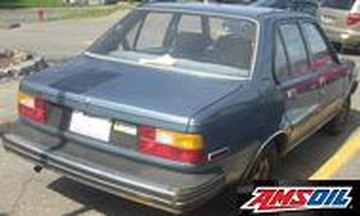
Catalog vehicle photograph for 1981 Renault 18I
Vehicle photograph from our catalog. Appearance may differ by model or trim.

If you're looking for another year, make or model instead of this 1981 Renault 18I motor oil, try one of these similar models below. We try to keep one page for each model vehicle.

Visit us on social media